The first month is the hard part. Not because of willpower — because your brain has wired vaping into dozens of tiny daily moments: your morning coffee, the drive home, the scroll on the couch. Quitting means rebuilding those moments one at a time.
Here's the good news: it gets easier, and it gets easier faster than most people expect if you have a plan. This is a gentle, realistic 30-day map — no shame, no cold-turkey heroics required.
Why the first 30 days are hard (it's the ritual, not just nicotine)
Most quit advice focuses only on nicotine. But quitting isn't just about the addiction — it's about the habit. Studies of smokers show that the physical gestures of the habit — the hand-to-mouth motion, holding the device, the routine itself — can act as a self-soothing behavior that continues largely independently of the chemical craving (Frontiers in Public Health, 2025). In behavioral science this is the habit loop: a cue (stress, boredom, coffee) triggers a routine (reach and inhale), which delivers a reward (a moment of calm).
That's why you can't just remove the nicotine and expect the urge to vanish. You have to give the routine somewhere else to go. The whole plan below is built around that idea.
Week 1: Survive, don't optimize
Your only job this week is to get through it. Cravings tend to peak early and come in waves of just a few minutes. Ride them out.
- Map your triggers. For two days, note when you reach for your vape. Those are your cues.
- Have a replacement ready before the urge hits. This is where keeping your hands busy matters most — a flavored air device, gum, or even a glass of water. The point is to answer the cue with a new routine.
- Delay and breathe. When a craving hits, wait three minutes and take a few slow breaths. Most cravings fade before the timer's up.
Week 2: Replace the ritual
By now the sharpest cravings are easing, but the reaching reflex is still there. This week is about consistently meeting each cue with your new routine instead of the old one.
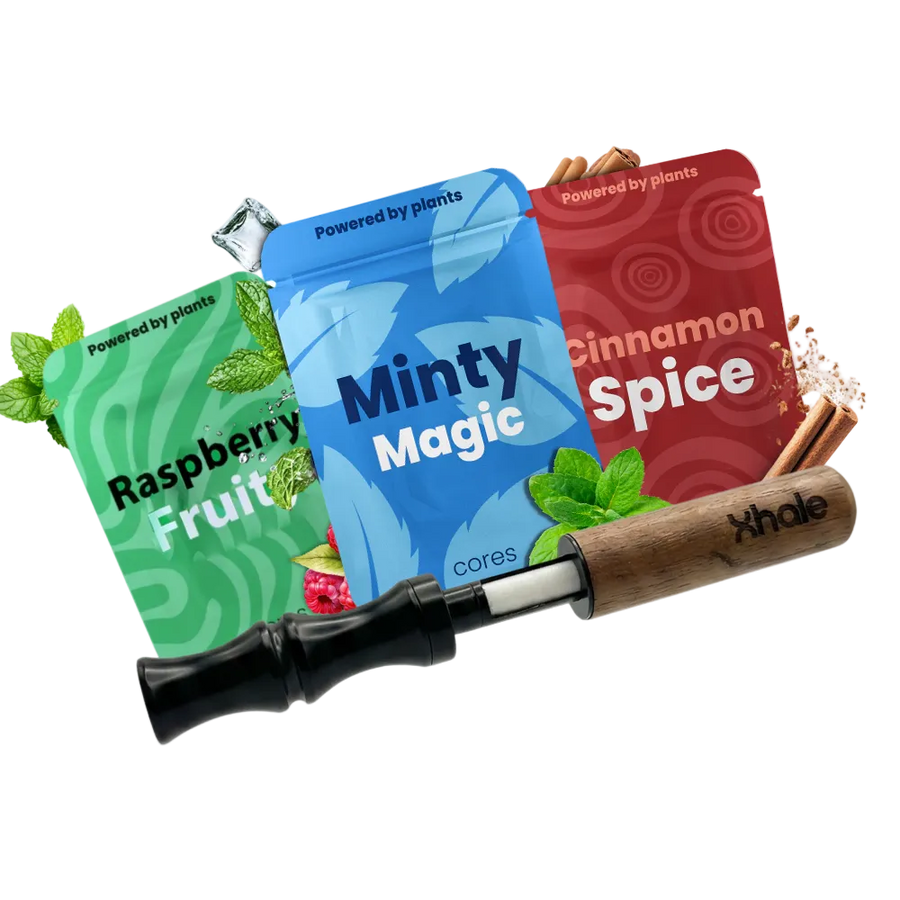
- Keep the hand-to-mouth motion — drop the nicotine. An Xhale flavored air device gives you the same physical ritual with no nicotine, smoke, toxins or harmful chemicals, so you're changing one thing at a time instead of everything at once.
- Protect your evenings. The hardest cues are usually after dinner. Plan a substitute activity for that window.
- Track it. Marking each day you stay on plan builds momentum — and a visible streak is a surprisingly strong motivator.
Weeks 3–4: Make the new routine automatic
This is where the new behavior starts to feel less like effort and more like default. Keep doing what's working and start noticing the wins: better taste and smell, more money in your pocket, fewer "I need to step outside" moments.
- Don't break the chain — but don't quit if you do. Slipping once won't undo your progress (more on that below).
- Reward the milestones. Put the money you'd have spent on vapes toward something you actually want.
- Rebuild the social cues. If certain people or places are tied to vaping, plan for them rather than avoiding them forever.
What to do with your hands and mouth
This is the question almost nobody prepares for, and it's the one that trips people up. The reach for something is a real, physical pull. Having a designated answer ready — something you can hold and bring to your mouth — turns a vague urge into a simple, repeatable action.
That's exactly what Xhale is for: a flavored air device using organic essential oil flavor cores, so you keep the calming ritual without putting anything harmful into your body. See how the Xhale Starter Pack works →
Why 30 days isn't the magic number
You may have heard it takes 21 days to form a habit. That number is a myth — it traces back to a 1960s observation about plastic surgery patients, not real habit research. The landmark study on this, led by Dr. Phillippa Lally at University College London, found that new habits took an average of 66 days to become automatic, with a range of anywhere from 18 to 254 days depending on the person and the behavior (UCL; Scientific American).
So if you don't feel "fixed" at day 30 — that's completely normal. Thirty days isn't the finish line; it's the steepest, most important climb. And here's the most reassuring finding from that research: missing a single day didn't meaningfully derail people's progress (summary of Lally et al.). One slip is a data point, not a failure. Keep going.
If you're working through a physical dependence and want extra support, consider talking to a doctor or a national quit service — they're free, confidential and genuinely helpful alongside whatever else you're doing.
Frequently asked questions
How long does it take to quit vaping?
The intense cravings usually ease within the first one to two weeks, but building a lasting new routine takes longer. Research on habit formation found an average of around 66 days for a new behavior to become automatic, with wide variation between people — so treat 30 days as the hardest early stretch, not the end.
What can I do with my hands instead of vaping?
Give the reach a destination: a flavored air device you can hold and bring to your mouth, gum, a fidget object or a drink. Replacing the physical ritual — not just removing the nicotine — is what makes the urge manageable.
Will I fail if I slip up once?
No. Habit research found that missing a single day did not meaningfully affect long-term habit formation. Treat a slip as a one-off and get back on plan the next day.
Can a flavored air device help me quit?
It addresses the behavioral side of the habit — the hand-to-mouth ritual — without nicotine, smoke or harmful chemicals. It isn't a medical treatment, but for many people the ritual is the hardest part to give up, and having a clean substitute ready makes the first month far more doable.